You keep asking what teachers think. Here’s the truth: You don’t actually want the answer. You want compliance with a smile.
You want to hear about “innovation” in the classroom—while forcing us to teach like it’s 1998. You want to fund AI initiatives—while judging our performance on tests that a robot could ace in five seconds flat. You want teachers to raise thinkers—but measure us by how well our students follow instructions.
We’re not dumb. We see it. And it’s time to say it.
AI Is the New Reality—But Federal Policy Still Pretends It’s a Toy
Artificial intelligence isn’t coming—it’s here. I’m using it in real time to build personalized supports, generate feedback, scaffold language, and simulate complexity. It’s a tool, not a threat.
But let’s be clear: AI isn’t just changing how we teach—it’s changing what students need to learn. And right now, our system doesn’t know how to handle that.
You say “use AI to create authentic learning,” but the state still requires me to measure learning using tightly scripted, grade-locked, scantron-friendly content. You can’t build future-ready classrooms when the definition of “success” is still a multiple-choice test.
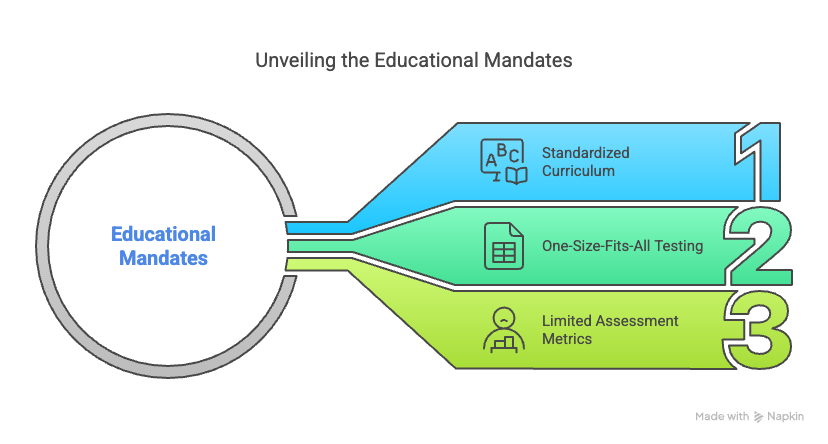
Under ESSA, I am required to:
- Teach every student the same challenging state academic content standards (often referred to as grade-level standards), regardless of actual need or ability.
- Test them all using a one-size-fits-all assessment that’s federally mandated (annual statewide tests in reading/language arts and math in grades 3-8 and once in high school, plus science assessments).
- Report scores that don’t measure creativity, collaboration, or adaptability—because those are too hard to “quantify.”
This is not innovation. This is bureaucracy dressed up in buzzwords.
You Want Me to Teach Like It’s 2025. But Test Like It’s 2001.
Let’s talk about the SAT.
- Still considered a “nationally recognized assessment” under ESSA’s Title I regulations, which states can allow districts to use for high school accountability.
- Still used to measure “college and career readiness.”
- Still required for compliance or graduation in many states (as of early 2025, around 25 states required either the ACT or SAT).
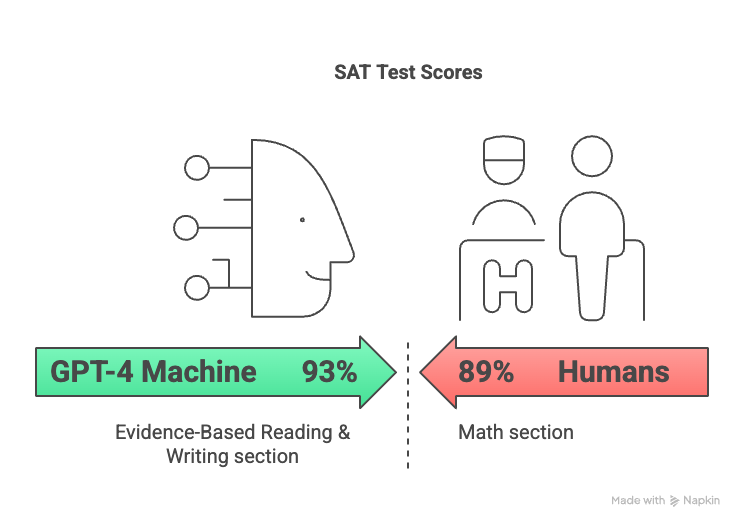
Meanwhile, GPT-4—a machine—scored in the ~93rd percentile on the SAT Evidence-Based Reading & Writing section and ~89th percentile on the Math section .
So now we’re in this absurd position: Machines can outperform humans on the very tests we’re using to judge human potential.
And yet we still expect students—many of them first-generation college applicants, multilingual learners, or neurodiverse—to sit in a fluorescent-lit room and prove their value with a test that hasn’t changed fundamentally in decades.
This isn’t just outdated. It’s indefensible.
The Contradictions Are Everywhere—And No One’s Owning Them
ESSA says states must assess students annually using grade-level standards. At the same time, it claims to support “innovation” and “real-world learning.”
There’s even a section allowing up to seven states initially to pilot “next-generation assessments” under the Innovative Assessment Demonstration Authority (IADA). Seven. In a country with over 13,000 public school districts.
That’s not innovation. That’s a press release.
And even those states in the pilot? Their pilots have to prove their results are comparable to the old assessment system they’re supposedly replacing. You can’t call something innovative if you force it to behave like the status quo.
Politicians on both sides say they want “local control.” But the moment you tie school funding to federally measured outcomes, that control disappears.
You don’t get to say you want flexibility and then force everyone into the same test with a different name.
States Are Trying. The Feds Are Standing in the Way.
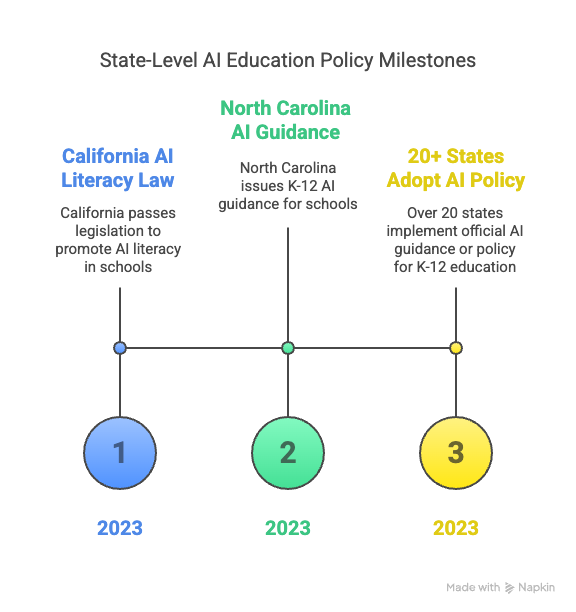
Let’s give credit where it’s due: states are trying to move forward.
- California passed AI literacy legislation .
- North Carolina issued K-12 AI guidance (Note: While NC has AI initiatives, a specific state-run “AI tutoring pilot” for K-12 wasn’t immediately verifiable; the state treasurer’s office has an OpenAI pilot for government efficiency).
- Over 20 states now have official guidance or policy on the use of AI in K12 schools, often including digital citizenship aspects.
But none of that matters if it doesn’t align with federal ESSA mandates—because those mandates still drive testing calendars, funding formulas, and the “accountability” metrics that politicians keep clinging to like a security blanket.
Real growth? Real curiosity? Real readiness? Doesn’t count unless it shows up on the test.
You Want Resilient, Critical Thinkers. Then Let Me Teach Them That.
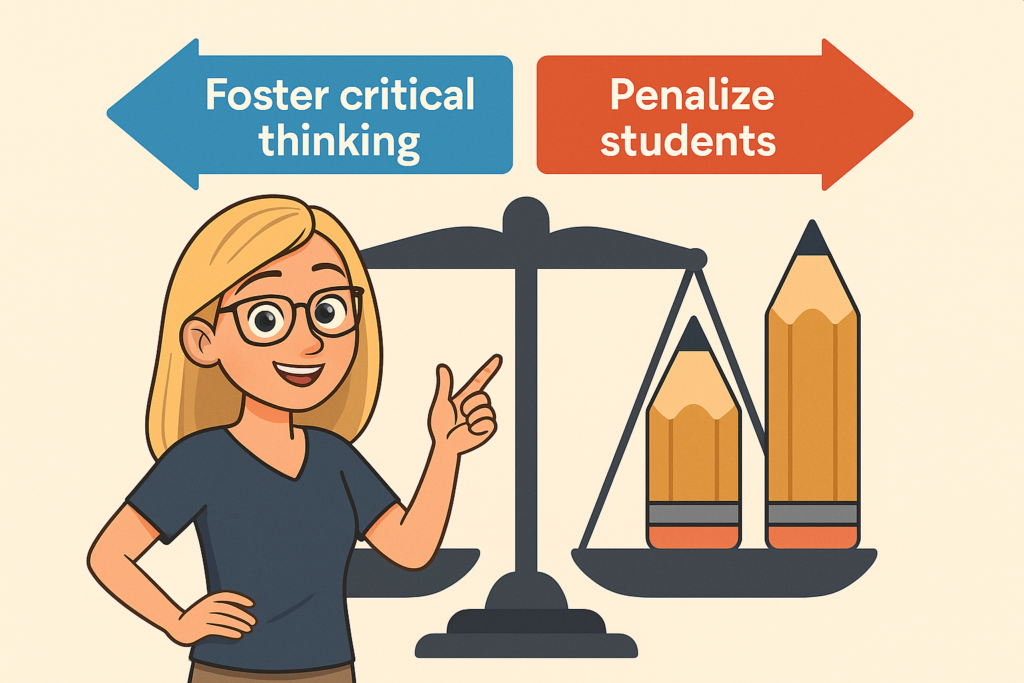
I want my students to ask hard questions. To challenge easy answers. To get things wrong and recover. To write things that matter—not things that scan well. To use AI as a tool without letting it replace their thinking.
But that kind of learning isn’t linear. It’s messy. It doesn’t show up cleanly on a bar graph.
So while the world around them accelerates into an AI-driven future, our education system keeps measuring students on how well they follow instructions someone else wrote years ago.
It’s no wonder they’re tuning out.
Here’s What Teachers Really Think
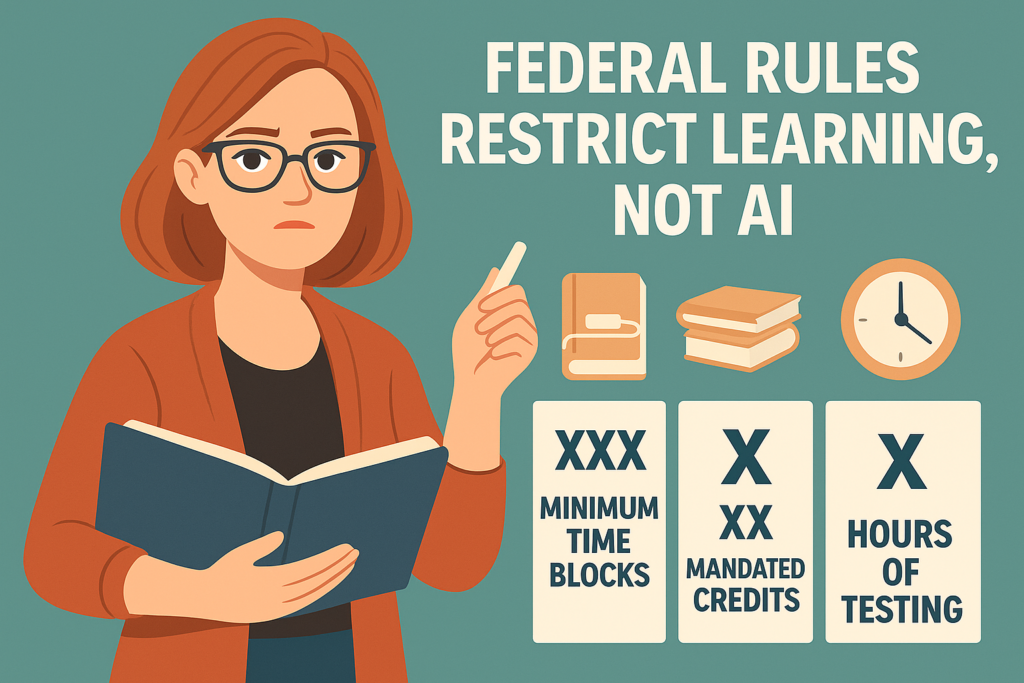
We are not scared of AI. We are not afraid of change. We are ready to meet the future head-on—because we’re already doing it in our classrooms.
What we’re afraid of is this:
A federal system that mandates the past.
A test that has no space for complexity.
A scoreboard that ignores the things that actually matter.
If you want us to teach for tomorrow, stop punishing us for not pretending it’s yesterday.
You asked for a teacher’s opinion.
Here it is—fact-checked, lived-in, and long overdue.
Now do something with it.
Follow @YouNifAiEd on Instagram , Facebook and X. Or join the private Facebook group: Teachers Using AI (Without Losing Their Minds).We’re not here to impress. We’re here to transform.
